Marketing operations systems
The whole operation, in one system.
Workflows, approvals, budgets, and an executive view that's true the moment someone opens it — replacing the six tools and one person's head your status lives in today.
Free 30-minute call. We map how status actually moves through your team, whether you hire us or not.
Fixed price · Fixed timeline · 12 weeks to launch
The diagnosis
Three things break, always in this order.
None of this is a people problem. The work is getting done — it just cannot be seen from outside the team doing it, and that gap is what everyone upstream reads as risk.
Leadership finds out last.
When the CEO asks where spend went, the answer takes two days to assemble. Not because nobody knows — because nobody can see it in one place.
Your best operator becomes the database.
One person holds the real status of everything. That person is now a dependency, not a strategist — and they know it.
The work looks tactical from outside.
Fifty-hour weeks spent maintaining visibility instead of producing it. The team is executing well and reading as overwhelmed.
Another tool won't fix this. The work has to live in one place.
What we build
One system that assembles itself around how you already work.
Not a dashboard bolted onto chaos. A relational system where campaign, budget, owner, and approval are the same record — so the executive view is a consequence of the work, not a second job. We build it on Airtable.
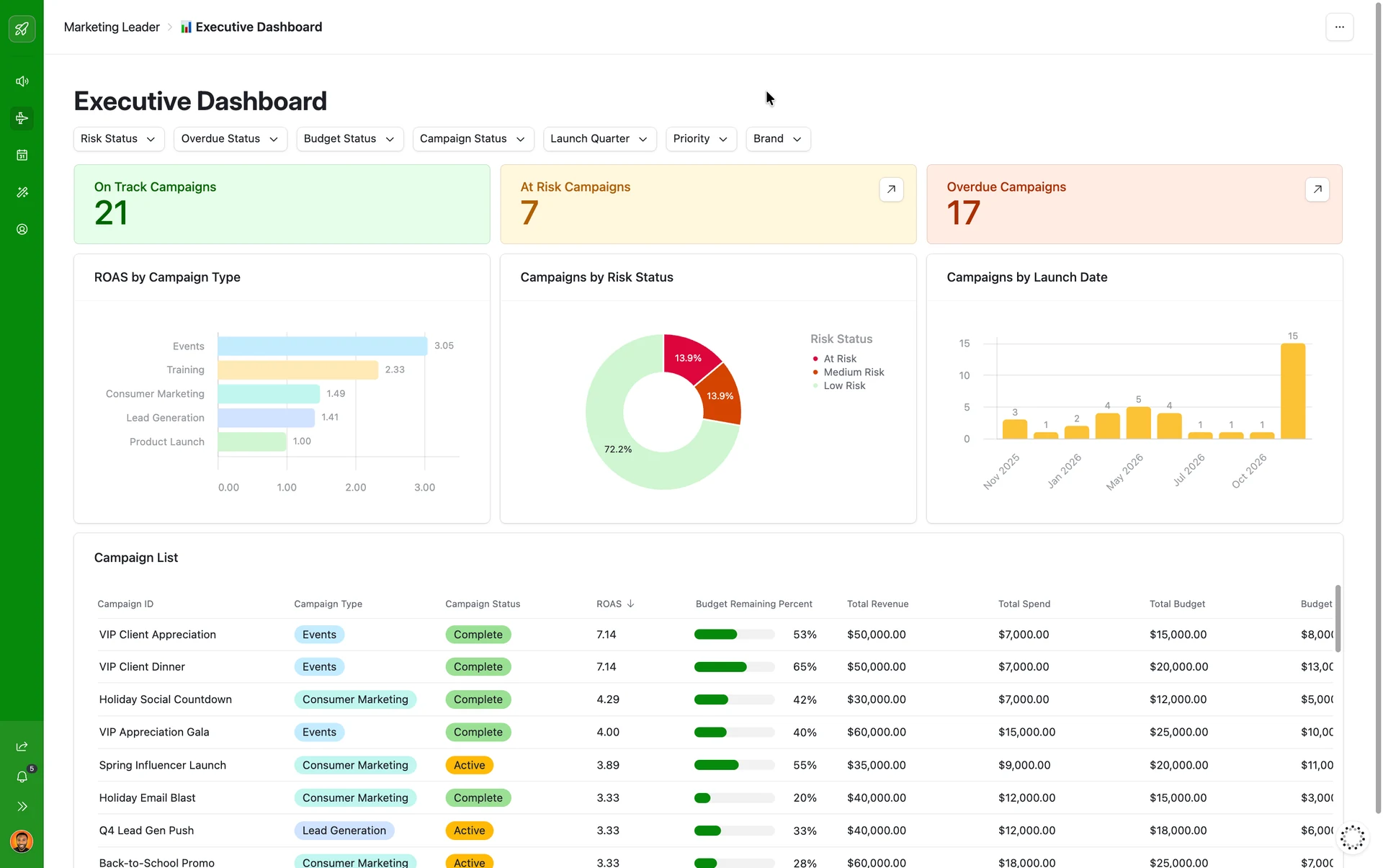
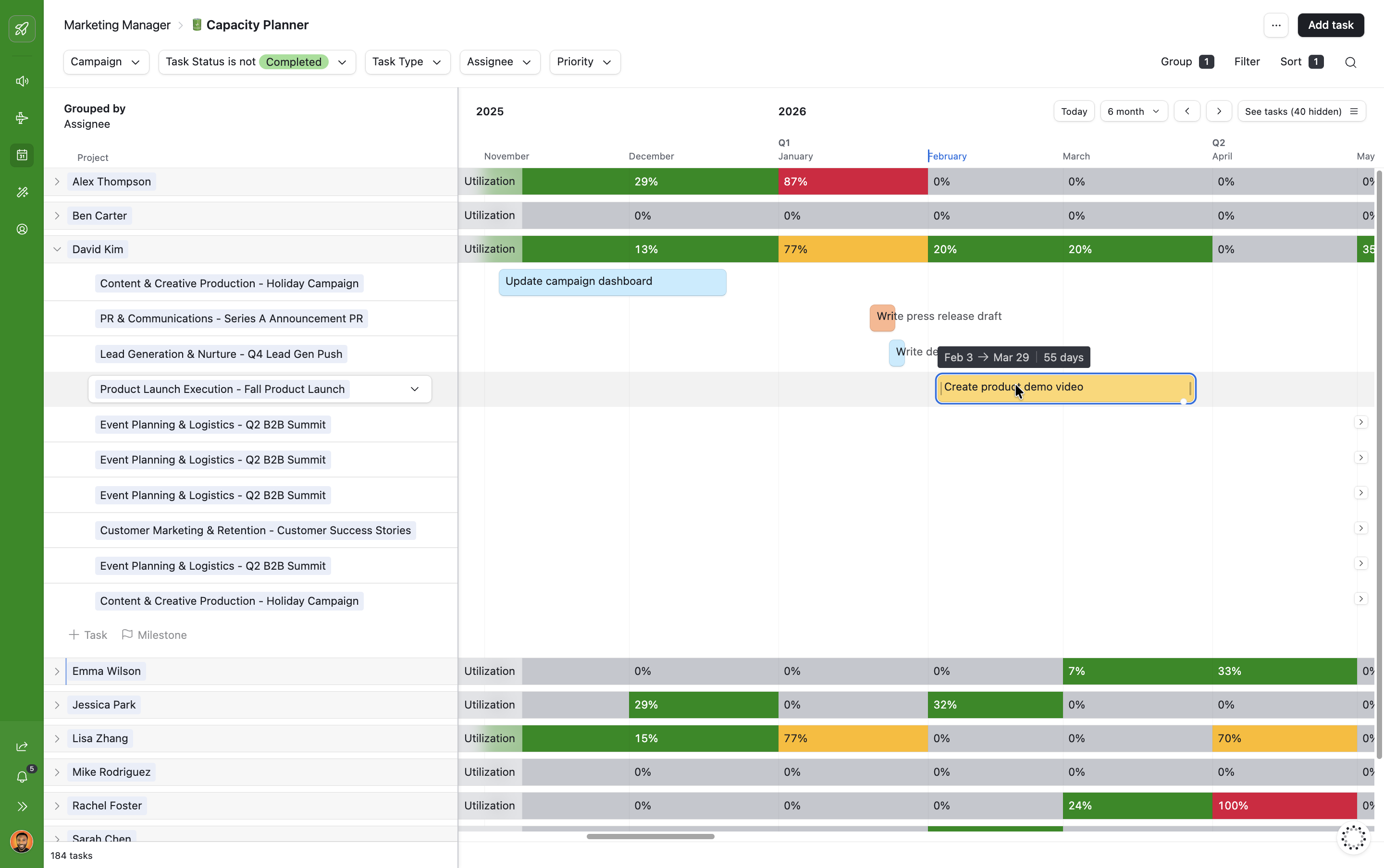
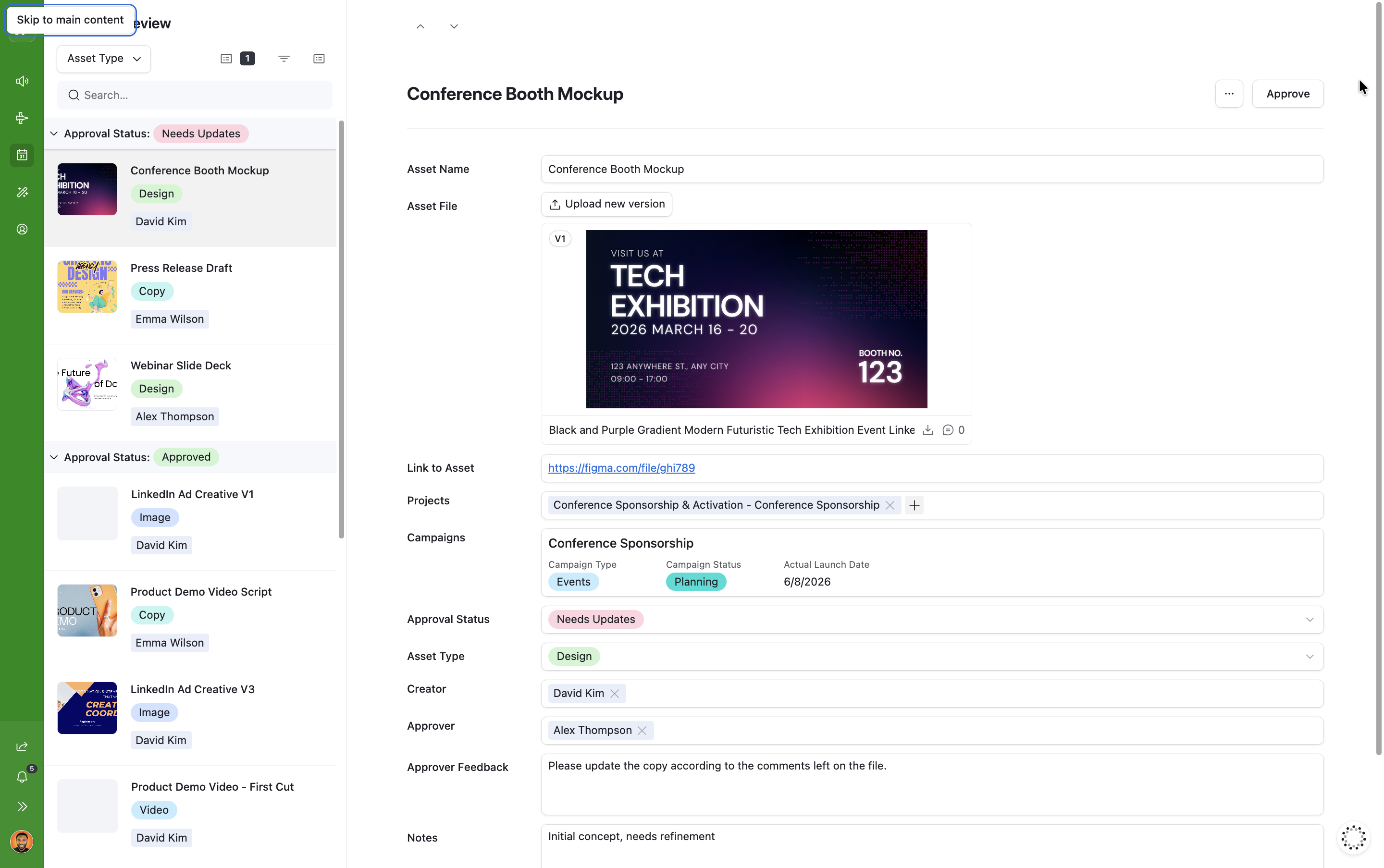
Every campaign in one place, with pacing and risk read off the records rather than typed in. Demo environment, sample data.
The sequence
Twelve weeks from now, you get to do the job you were hired for.
Every stage ends in something you can see — a document, a working view, a trained team. The price and the dates are fixed before anyone builds anything.
Interviews, not a questionnaire
Every team that touches the work, in their own words. We map what happens, including the parts nobody documents because everyone already knows them.
Process mapRequirements you can veto
Data model, views, automations, integrations — priced and dated before a line is built. You approve it or we revise it.
Priced blueprintThe build, visible weekly
Working system, role-specific views, and your core integrations — built in stages you review weekly, not a reveal at the end.
Working systemHandover that holds
Live training by role, written documentation, and sixty days of support while the team's habits move over. Then it's yours.
Trained teamCase studies
Marketing teams already running this.
Real builds, named clients, and the numbers we were able to clear for publication.
Questions
Common questions about marketing operations systems.
If yours isn't here, the free consultation is the fastest way to get a straight answer.
What is a marketing operations system?
A single system where campaign, budget, owner, and approval are the same record rather than four separate trackers. Intake, review, spend, and status all live in one place, so the executive view is a consequence of the work getting done instead of a report somebody maintains.
How is this different from Asana, Monday, or a project tool we already have?
Project tools track tasks. This tracks the operation — a campaign record carries its brief, its budget, its approvals, and its status, and those relationships are what make a portfolio view possible. Most teams we work with already have a project tool; the problem is that the answer to "where did spend go" still lives in six places and one person's head.
How long does it take?
Twelve weeks from discovery to handover: two weeks mapping how the work actually moves, two weeks on a blueprint you approve before anything is built, six weeks building in stages you review weekly, and two weeks of training and handover. The dates are fixed before the build starts.
What does it cost?
Scoped to the work, quoted as a fixed price after a free consultation. You get the price and the timeline together, before you commit — and if we don't think a build is worth doing, we say so.
Do we have to replace the tools we already use?
Usually not all of them. The goal is one source of truth, not one vendor — we connect what earns its place and retire what only exists to paper over a gap. Which tools survive is part of the blueprint you approve.
Who runs it after you leave?
Your team. Handover is training by role, written documentation, and sixty days of support while habits move over. A system that only works while we're in it is a system we built wrong.
What if our process changes after launch?
It will. That's why the structure is relational rather than a set of fixed views — new campaign types, owners, and approval paths are configuration, not a rebuild. You get the documentation to make those changes yourselves.
The next step
Show us how the work moves today.
Thirty minutes. You walk us through how the work moves today; we tell you where it's breaking and what a better system would take — scope, timeline, price. If it isn't worth doing, we'll say that too.
Worst case, you leave with a clearer picture of your own system.